How to Sell Crochet Patterns Online: From Finished Design to First Listing
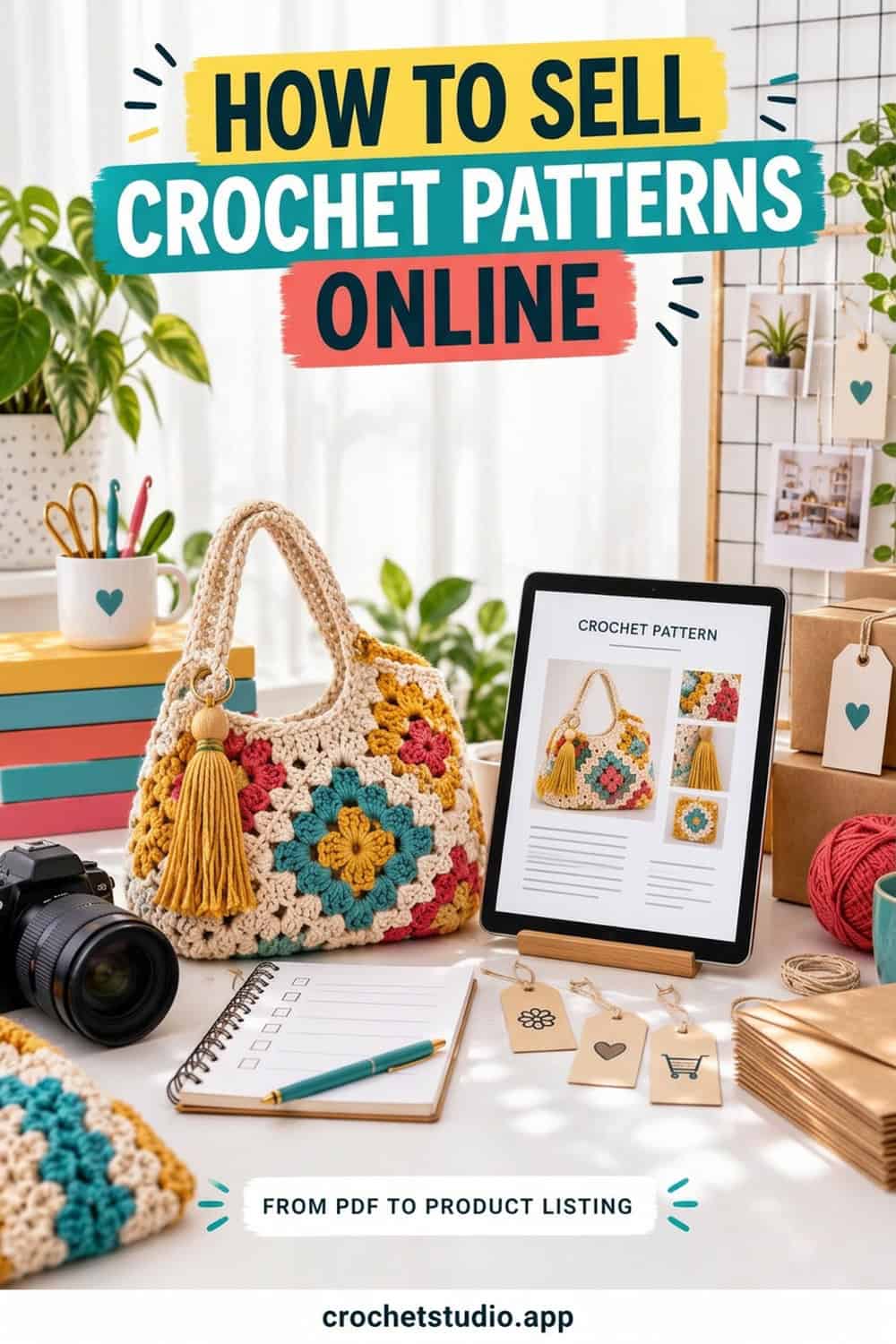
Selling a digital crochet pattern starts before you upload the file. The product must be clear, tested, easy to use and presented to the right maker.
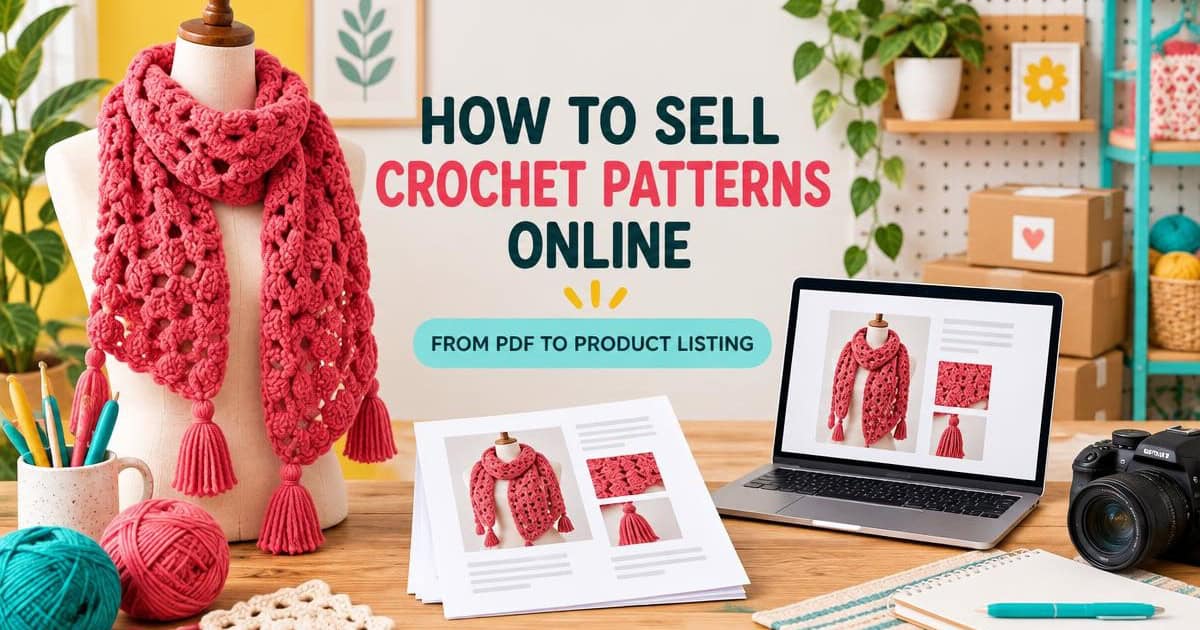
Table of contents
- 1. Make sure the pattern is ready to sell
- 2. Choose where to sell
- 3. Set a price you can explain
- 4. Create a listing that answers buyer questions
- 5. Use photos that help someone buy with confidence
- 6. Prepare a small launch
- 7. Support the pattern after release
- From writing desk to shop listing
- YOUR NEXT STEP
A finished crochet pattern can keep reaching makers long after you complete the original sample. But uploading a PDF is not the same as building a product people trust. Before you sell, the pattern needs to be tested, the listing needs to answer buyer questions and you need a simple plan for updates and support.
1. Make sure the pattern is ready to sell
A paid pattern should feel complete. The maker should not need to message you for basic information that belongs in the file.
- The pattern has been tested by other crocheters
- All stitch counts, repeats and size numbers are checked
- Materials, gauge and finished measurements are clear
- Special stitches and construction are explained
- Photos or diagrams support difficult steps
- The PDF is readable on a phone and when printed
- Your contact and copyright information are included
If the pattern has several sizes, test more than the sample size. The smallest and largest sizes are especially useful because grading problems often appear at the ends of the range.
2. Choose where to sell
There is no single best shop for every designer. Choose the place that fits your audience and the amount of control you want.
| Option | Useful when | Trade-off |
| Etsy | You want access to shoppers already searching a large marketplace | You compete with many listings and follow marketplace rules and fees |
| Ravelry | You want to reach knitters and crocheters who search by craft details | Your listing must be accurate and appealing inside a specialist marketplace |
| Payhip or Ko-fi | You already have people to send to a simple digital shop | You are responsible for bringing most of the traffic |
| Your own website | You want control over your brand, customer journey and email list | You must build and maintain your own audience |
Marketplace fees and policies change. Check the platform's current seller pages before setting your price or making a comparison.
3. Set a price you can explain
Price is not only about the number of hours you crocheted. Consider the complexity, number of sizes, amount of testing, number of helpful photos or diagrams and the value of the finished project. Compare patterns that solve a similar problem, not only patterns that use the same yarn.
Avoid pricing from promises of "passive income." Digital products still need customer support, corrections, listing updates and marketing.
4. Create a listing that answers buyer questions
Lead with what the buyer will make. Use plain search words before a creative design name. Make it obvious that the listing is for a digital pattern, not a finished item.
| Crochet Market Bag Pattern – Easy Reusable Tote PDF – Summer Tide Bag |
Your description should quickly cover:
What the project is
Skill level and techniques used
Available sizes and finished measurements
Yarn weight, approximate amount and hook size
Would you like to save this?
What the PDF contains
Which crochet terms are used
Whether the buyer may sell finished items
How the digital file is delivered
5. Use photos that help someone buy with confidence
The first image should show the finished item clearly. Add photos that show scale, texture, fit, color options and important details. For clothing, include different views and say which size is shown. A preview of a clean pattern page can also show buyers what they will receive without revealing the full instructions.
Tester photos can show the design in different yarns and sizes. Use them only with clear permission and credit the tester as agreed.
6. Prepare a small launch
You do not need a huge audience. Begin talking about the design while it is being tested. Share the yarn choice, a problem you solved, a close-up detail and approved tester projects. Invite interested makers to an email list so you can reach them when the pattern is ready.
On launch day, give people one clear link. Check it yourself on a phone: can a visitor understand what the pattern is, see the price and complete the purchase?
7. Support the pattern after release
Keep a list of common questions. If several buyers pause at the same line, improve the pattern and upload a corrected version. Tell earlier buyers what changed. Good support protects your reputation and makes the next pattern easier to write.
From writing desk to shop listing
CrochetStudio helps you keep the parts of the release connected. Write the pattern with automatic numbering and stitch counts, manage testers in the Testing Hub, prepare a styled PDF and generate a starting draft for Etsy, Ravelry or Instagram from your own pattern details.
The listing helper is not a promise of sales, and CrochetStudio does not generate your design with AI. You stay responsible for the pattern, price, photos and final listing.
YOUR NEXT STEP
| Write your next sellable pattern in one place. Start free at https://crochetstudio.app/editor |
Read the next post in this series about writing and publishing your own crochet patterns: Crochet pattern design resources
Useful links
Start writing in CrochetStudio: https://crochetstudio.app/editor
See the Testing Hub demo: https://crochetstudio.app/testing-hub-demo
Explore the pattern-design course: https://crochetstudio.app/learn
Compare plans and PDF options: https://crochetstudio.app/pricing
Check out my Latest Video!
Subscribe to my: